Home > Projects > Bridge

Connecting Principles Through Practice

About

BRIDGE explores how civil society shapes the future of democracy in Europe – not only as an observer, but as an active force for change and resilience.

Why Bridge?

The Reykjavík Principles for Democracy, adopted by the Council of Europe in 2023, came at a crucial moment in Europe’s democratic journey. However, for many civil society actors, the initial drafting of the principles, and the proposed implementation parameters, lacked adequate bottom-up engagement. The BRIDGE process has aimed to address this gap, not simply by commenting on what exists, but by co-creating visions of what is missing, what must be strengthened and how democratic standards must evolve in practice.

Civil society organisations (CSOs), particularly those working at the grassroots level, must be recognised as not just service providers or advocacy groups, but as political actors and democratic agents in their own right. In contexts where elections are held without fairness, where consultation exists without co-decision and where rule of law is undermined, it is civil society that often provides the last infrastructure for democracy.

It is from this understanding that we are delivering the BRIDGE initiative, as collective call to strengthen, revise and expand the Reykjavík parameters to reflect the lived realities, systemic challenges and emancipatory visions shared by communities across Europe.

Project Overview

The BRIDGE (Building Resilience and Inclusion for Democracy and participatory Governance in Europe) project is a civil society-led initiative co-funded by the Council of Europe, implemented from April 2025 to October 2025, and coordinated by Volonteurope together with national partners and regional stakeholders. It is both a political and practical intervention grounded in the lived realities, expertise and vision of civil society actors across Europe and its territories. The project is rooted in the conviction that democracy must be built with civil society, not just around it, and that inclusive and participatory governance requires structural transformation, not rhetorical affirmation.

Across Europe, including in several Council of Europe Member States, democratic backsliding is no longer a future threat, but a daily, lived reality. Civic space is shrinking. Disinformation is rising. Young people, migrants, LGBTQI+ communities, ethnic minorities, older persons and people with disabilities are increasingly excluded from meaningful decision-making. Civil society is simultaneously asked to fill the gaps left by weakening institutions, while being underfunded, delegitimised, or, in some contexts, directly attacked.

Participants across the BRIDGE process, from the hills of Zugdidi to the streets of Brussels, the islands of French Overseas Territories to the towns of Serbia, echoed this urgency. They shared testimonies of political interference, institutional inertia, performative consultation, burnout and the daily grind of trying to safeguard democratic life amid growing precarity. At the same time, they also shared practices of hope: participatory foresight, horizontal assemblies, intersectional feminist alliances, youth-led movements and transnational solidarity rooted in lived experience. These are essential components of democratic resilience.

These experiences form the foundation of BRIDGE’s mission: to empower civil society as a co-creator of governance and resilient democratic futures.

Project coverage

The project is coordinatedy by Volonteurope with partners in United Kingdom, Belgium, France, Hungary, Serbia, Georgia, Italy and Guadeloupe.

BRIDGE Objectives

BRIDGE aims to to enhance the capacity, resilience, and engagement of CSOs across Europe in promoting democratic values and civil participation by increasing their awareness of existing Council of Europe standards and opportunities, fostering deeper cooperation between CSOs and the Council of Europe, and strengthening their capacity.

Increasing awareness of CoE standards

To raise awareness among CSOs about existing Council of Europe standards, mechanisms, and opportunities for civil society engagement.

To increase knowledge and capacity within CSOs to effectively utilise CoE mechanisms, such as the Reykjavik Principles, in their advocacy and operations — by organising roundtable discussions to identify current challenges and parameters for the Reykjavik Principles, reaching 298 professionals across Europe.

To create a better understanding of how the Council of Europe operates and how CSOs can actively participate in standard-setting, monitoring, and cooperation processes.

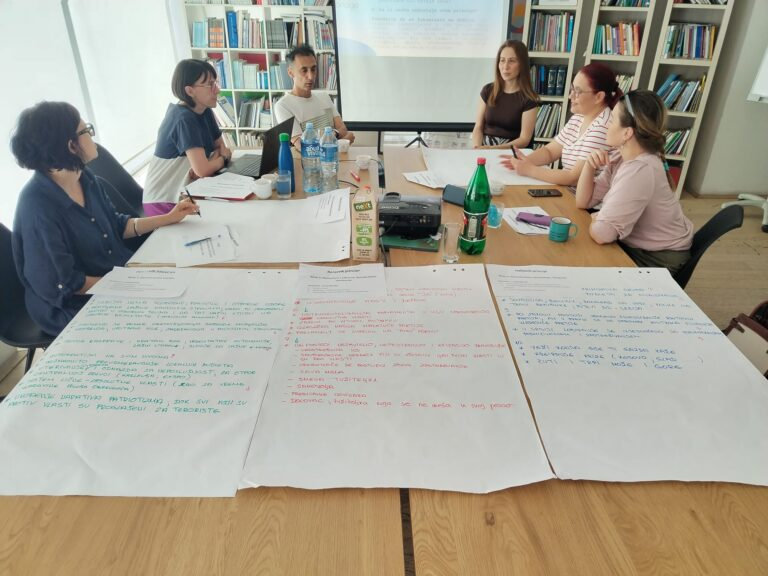
National Roundtable on the Reykjavík Principles in Belgrade

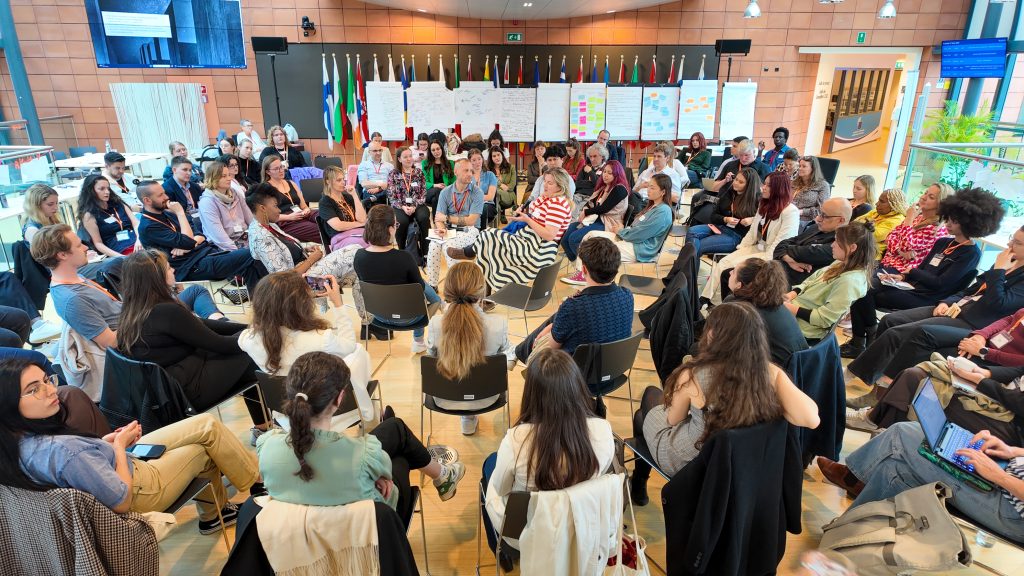
In June 2025, BRIDGE partners and civil society organizations took part in a national roundtable hosted at the Human Rights House in Belgrade. The discussion focused on the practical implementation of the Reykjavík Principles to strengthen democratic resilience and civic participation across Europe.

Partners

Structure

The BRIDGE project was created as a bottom-up, non-extractive, co-creative democratic space.

Its aim is to empower and connect civil society organisations, grassroots movements and active citizens in their roles as key democratic actors and co-creators of governance.

3 fundamental questions of the project

DEMOCRACY

What does it mean
in our lived experience?

CIVIL SOCIETY

How can it shape the future
of democratic governance?

PARTICIPATION

What enables or obstructs
our ability to participate?

The scope

Through seven national roundtables held in Belgium, France, Georgia, Hungary, Italy, Serbia and the UK (May–July 2025), and a series of regional online roundtables aimed at all Member States of the Council of Europe, in September 2025, covering all European regions and overseas territories, BRIDGE has captured and synthesised local realities and collective aspirations considering the Reykjavík Principles.

Italy
Hungary
Serbia
Belgium
UK
Georgia
France

Project’s Timeline

  • 7 national roundtables: Belgium, France, Georgia, Hungary, Italy, Serbia, UK

    May-July 2025

  • Regional online roundtables for all Member States of the Council of Europe, covering all regions and overseas territories

    September 2025

  • Final Futures Lab and Summit in Strasbourg

    October 2025

A final Futures Lab and Summit in Strasbourg (October 2025) will further define this initiative not just as a project, but a democratic act in itself: participatory, intersectional, intergenerational and transnational.

Results

Through BRIDGE, people and organisations from all over Europe came together to share experiences, build connections, and strengthen civic participation. These key results show the impact of our collective effort.

Engagement

Civic voices connected across Europe through national, regional and European-level dialogues.

participants engaged
0
discussions (national, regional and European levels)
0
European Summit
1

Knowledge and Resources

A co-created resource showcasing innovative civil participation models and real tools for CSOs across Europe.

Catalogue of Civil Participation co-created
1
best practices
0
downloads
+ 0

Networks and Collaboration

Building stronger, cross-border networks that empower civil society to act together for Council of Europe values.

new CSOs joined CINGO
0

Reach

A continent-wide digital campaign inspiring participation and amplifying citizen input through the BePart platform.

people reached across multiple platforms
+ 0
new inputs on BePart platform
+ 0

Do you want to know more?

to the

TOP